
Fans, lights and a TV under a patio cover: how to plan the power
A patio cover without power is a nice roof. A patio cover with a fan, lights and a couple of outlets is a room you use from March to November. The time to plan the power is before the ceiling goes on, not after. Here's what to put in and why.
Last updated: September 2026
The short answer
Run a dedicated circuit from your panel. Put in at least one fan, a set of damp-rated lights, and two weatherproof GFCI outlets. If you want a TV, plan its outlet and a cable path now. And rough it all in while the framing is open.
Wiring a cover after it's built is like running plumbing after the drywall is up. You can. It just costs more and shows.
Start with the circuit
Everything under the cover runs off power from your house panel. We run a dedicated circuit out to the cover, trenched and in conduit where it crosses the yard. Our published outdoor electrical line is $1,450: a GFCI-protected circuit from the panel to two weather-rated outlets, roughed in and trimmed out.
Cover pricing, with electrical
Roofed cedar patio cover, priced off a signed job. Design and permits are one flat line. Concrete and power are only there if you need them.
| What | Includes | Price |
|---|---|---|
| Cedar post-and-beam patio cover | Western Red Cedar post-and-beam frame on engineered piers with concealed standoff bases, doubled perimeter beams, exposed rafters, corbels at every post, standing seam metal roof sloped for drainage, full stain finish. | $119/SF$20,000 minimum |
| Design, engineering and permits | Engineered plan set for a roofed structure, structural detailing of the post anchorage and roof framing, the permit application and the city's permit fees. | $2,200 |
| Reinforced concrete patio | Base preparation, forming, reinforcement, expansion joints, 4 in placement and broom finish. Patios, walkways and pads. | $19/SF$6,000 minimum |
| Outdoor electrical | Dedicated GFCI-protected circuit from the existing panel, trenched and in conduit, ending at two weather-rated outlets. Rough-in and final trim. | $1,450 |
Fans, light fixtures, extra switches and a TV outlet are added to that at the visit, based on what you want. The circuit is the expensive part. Adding devices to it once it's there costs far less than a second trip.
Ceiling fans
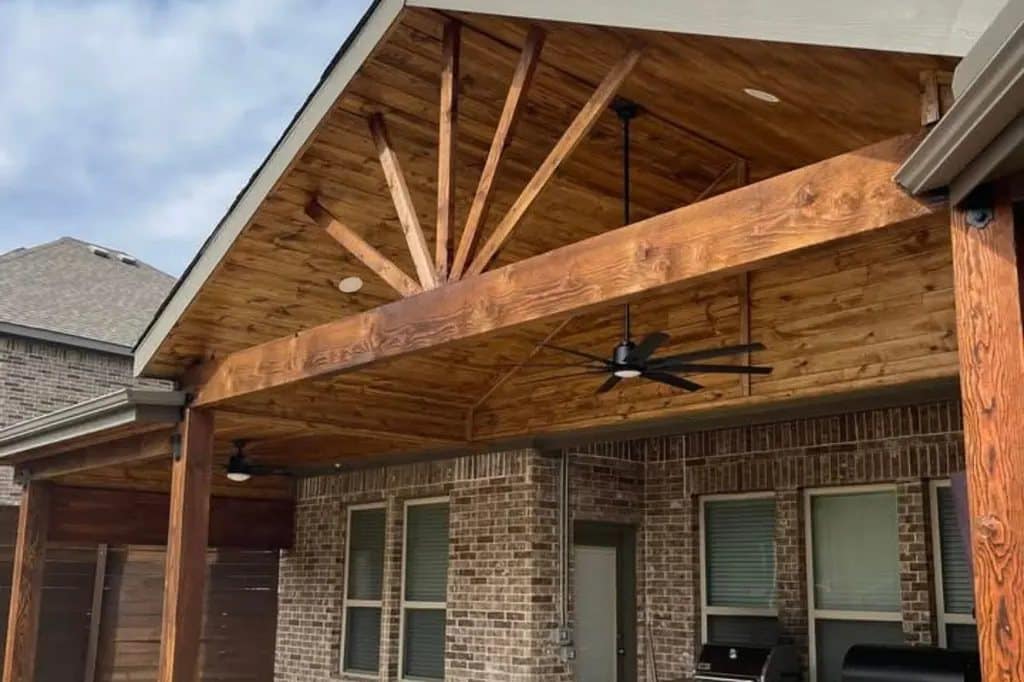
In a Texas summer the fan does more than anything else to make a covered patio usable. A metal roof blocks the sun, but still air under any roof gets warm. A fan moves it.
- Buy a fan rated for the location. Under a roof, damp-rated is the minimum. If rain can blow in on it, wet-rated.
- Mount it on a box rated to carry a fan, with solid blocking in the framing above it.
- Put each fan on its own switch if there's more than one, so you can run just one.
- Size the fan to the space. A big cover often wants two fans rather than one huge one.
We frame the blocking in while the rafters are open. That's the difference between a fan that sits solid and one that wobbles.
Lights
Thin LED wafer lights are the clean choice for a cover. They sit nearly flush with the ceiling, they don't need a deep can, and they come rated for damp locations. Put them on their own switch, separate from the fans.
On an exposed rafter ceiling, plan where the lights go before the roof deck goes on. The wire has to run somewhere, and it looks best hidden along a rafter, not stapled across the underside. With a tongue-and-groove ceiling, the boards hide the wire and the lights sit in the boards.
Outlets
The electrical code requires outdoor outlets to be GFCI protected and weather resistant, with a cover that stays closed while something is plugged in. Two outlets is a good baseline: one for a phone or a speaker, one for a grill light, a heater or a blender. Put them on posts where you'll actually use them, not buried behind furniture.
A TV
A TV under a patio cover is one of the most asked-for extras. It works best when it's planned, not added.
- Mount it where the sun won't hit the screen in the afternoon. West-facing patios need thought.
- Put an outlet right behind where the TV will hang, so no cord runs down the post.
- Run an empty conduit from the TV spot to where your streaming box or cable comes in, for any cable you'll want later.
- Use a TV rated for outdoor use, or keep it well back under the roof and out of blowing rain.
The mount goes into solid framing or a post, not just a board. A TV and mount together are heavy, and wind on a patio is real.
Heaters and speakers
If you want to use the patio in January too, an electric patio heater mounted to the beam is the cleanest option. Most need their own dedicated circuit, so decide early. Speakers are the same story. Run the speaker wire while the framing is open and it disappears. Add it later and it shows.
Rough-in timing
Rough-in is the stage where wire, boxes and blocking go in before anything is closed up. On a patio cover that's after the frame is up and before the roof deck or ceiling covers the rafters. Miss that window and the options shrink.
Decide on fans, lights and the TV before we frame. It's a five minute conversation that saves a second trip.
Permits and inspections
A new outdoor circuit is permitted electrical work in most cities, separate from the building permit for the cover itself. The work gets inspected at rough-in and at final. We schedule it with the build so the inspector sees the wire before the ceiling closes.
What to decide before the visit
- How many fans, and where you'll sit under them.
- How many lights, and whether you want them dimmable.
- Where the outlets go.
- Whether a TV is in the plan now or later. Later still wants the outlet and conduit now.
Questions
What kind of ceiling fan do I need for a patio cover?
A damp-rated fan at minimum under a solid roof. If rain can blow in on it, wet-rated. Mount it on a fan-rated box with blocking in the framing.
How much does it cost to add power to a patio cover?
Our published line is $1,450 for a dedicated GFCI circuit from your panel to two weather-rated outlets. Fans, lights, extra switches and a TV outlet are priced on top of that at the visit.
Can I add a fan to my patio cover later?
Yes, but it costs more. The blocking and the wire are easiest to put in while the rafters are open. After the ceiling is on, it's harder and usually shows.
Do outdoor outlets need to be GFCI?
Yes. The electrical code requires outdoor outlets to be GFCI protected and weather resistant, with an in-use cover that stays closed while something's plugged in.
Can I put a regular TV under a patio cover?
You can if it's well back under the roof and out of blowing rain and direct sun, but an outdoor-rated TV holds up better. Either way, plan the outlet and a cable path before the ceiling goes on.
Keep reading
What a cedar patio cover costs in Texas
Roofed cedar patio cover pricing per square foot in Dallas-Fort Worth and East Texas, from a signed job, with worked examples and what's not included.
Attached or freestanding: which patio cover fits your house
Attached patio covers tie into your roof. Freestanding covers stand on their own posts. How to choose in Texas and where each one goes wrong.
Patio cover permits, HOA approval and engineering in Texas
What a patio cover or pergola permit takes in DFW and East Texas. City permits, HOA approval, engineering, inspections, and why Blackland clay sets pier depth.
Patio covers or see every published price.
Get a number
Reading is cheaper than guessing
Tell us what you are building and we will price it against a written scope. Or call 469-721-0129.