
Pergola or patio cover: which one you actually need
A pergola is open slats. It keeps sun off and lets rain through. A patio cover has a roof. It sheds water. Everything else on this page follows from that one difference.
Last updated: September 2026
The short answer
If you want to sit outside when it rains, get a patio cover. If you want filtered shade and open sky, get a pergola. If you're not sure, think about the last time you gave up on the back yard. Was it the sun or the rain?
A pergola is a sun hat. A patio cover is an umbrella. Nobody takes a sun hat into a storm.
What each one is
Pergola
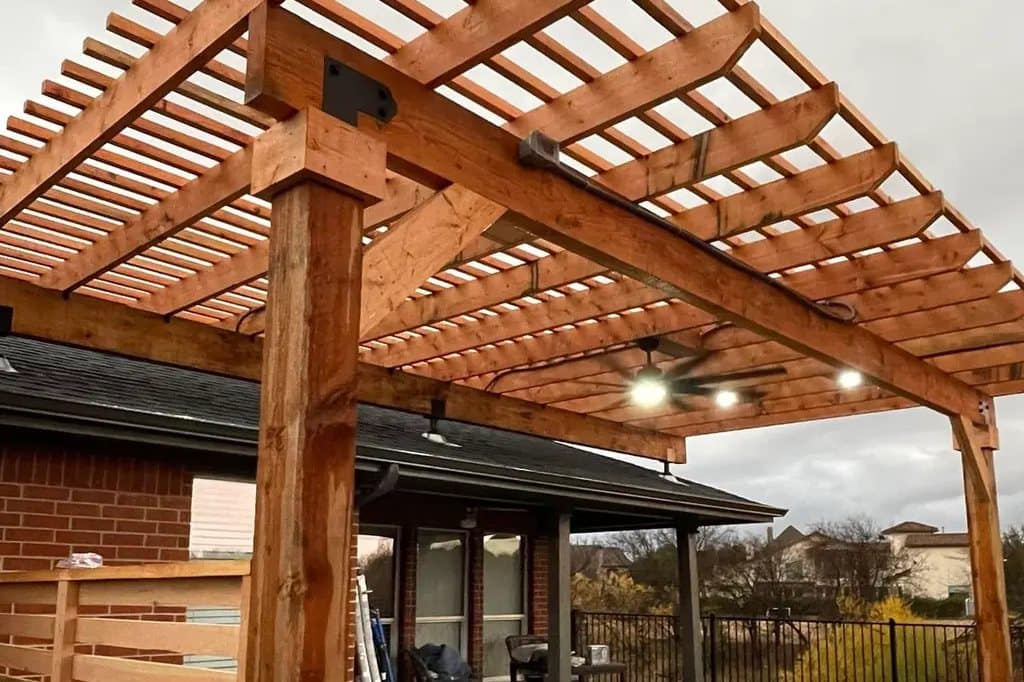
Posts, beams, a layer of rafters, and often a second layer of purlins on top. No roof deck. The slats throw shade that moves with the sun. At noon in July you get real relief. At 5pm with the sun low in the west, you get less.
Patio cover
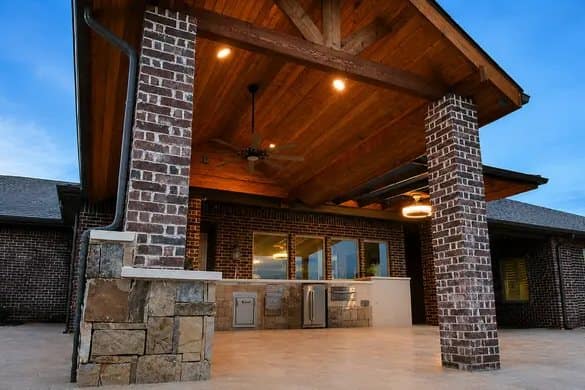
Same posts and beams, then a roof. Ours is standing seam metal, sloped so water runs off one side. The shade is total. The space stays dry. You can hang a fan, run lights and mount a TV without worrying about the next storm.
Cost
Our reference pergola came to $17,000 all in. That was 9 posts, freestanding, two layers, stained, permitted. A smaller one costs less. We don't publish a per square foot pergola rate because no square footage was recorded on that job.
A roofed cover runs $119 per square foot with a $20,000 minimum, plus $2,200 for engineering and permits. The smallest cover we build lands around $22,200. A 300 square foot cover lands at $37,900.
Pergola, reference job
Open-top cedar pergola. This is what a real nine-post job cost. A smaller one costs less.
| What | Includes | Price |
|---|---|---|
| Cedar pergola, open top, 9 posts | Freestanding two-layer open-top pergola in Western Red Cedar with no roof covering. Nine 6x6 posts on decorative steel bases, 2x10 beams with profiled end cuts, a rafter layer and 2x2 top purlins, knee braces at every post-to-header connection, decorative connectors, and demo of the old structure.
| $15,900 |
Patio cover
Roofed cedar patio cover, priced off a signed job. Design and permits are one flat line. Concrete and power are only there if you need them.
| What | Includes | Price |
|---|---|---|
| Cedar post-and-beam patio cover | Western Red Cedar post-and-beam frame on engineered piers with concealed standoff bases, doubled perimeter beams, exposed rafters, corbels at every post, standing seam metal roof sloped for drainage, full stain finish. | $119/SF$20,000 minimum |
| Design, engineering and permits | Engineered plan set for a roofed structure, structural detailing of the post anchorage and roof framing, the permit application and the city's permit fees. | $2,200 |
| Reinforced concrete patio | Base preparation, forming, reinforcement, expansion joints, 4 in placement and broom finish. Patios, walkways and pads. | $19/SF$6,000 minimum |
| Outdoor electrical | Dedicated GFCI-protected circuit from the existing panel, trenched and in conduit, ending at two weather-rated outlets. Rough-in and final trim. | $1,450 |
So a pergola usually costs less for the same footprint. Not always. A large pergola and a small cover can land close. The roof is what you're paying for. If you need the roof, the savings don't matter.
Heat
A metal roof stops direct sun completely. The space under it can still get warm on a still August afternoon, because heat builds up under any roof. A fan fixes most of that. Open slats let heat rise straight out, but they also let more sun through.
If you want a fan, you want a roof. A fan under a pergola gets rained on. Our outdoor circuit is $1,450, and it goes in before the ceiling does.
Rain
This one is a binary. A pergola does nothing for rain. Some people add shade cloth or polycarbonate panels on top later. That works for a while. Then it sags, pools water or yellows. If you're already thinking about adding a roof, build the cover.
A cover also puts water somewhere. It all lands off one edge. If that edge drains toward the house or onto a flower bed, plan for a gutter. We look at where the water goes before we pick the slope.
Furniture and what lives out there
Under a pergola, cushions get wet. So does anything electronic. You'll bring things in or buy outdoor-rated everything. Under a cover, a sofa can stay out year round. An outdoor kitchen belongs under a roof. Grease, rain and electrical don't mix.
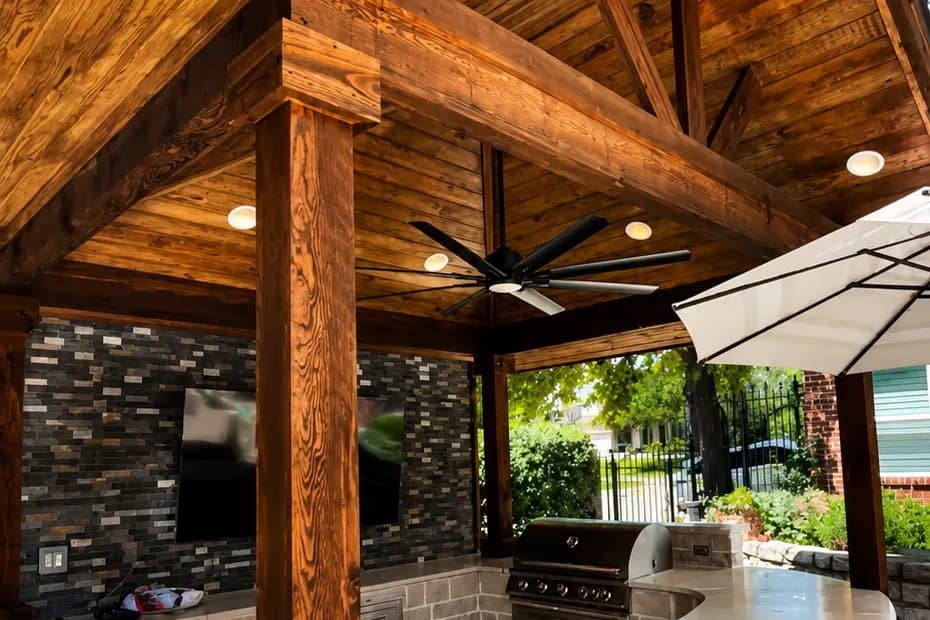
We don't publish outdoor kitchen pricing. The spread between a grill island and a full stone bar is too wide. We price kitchens at the site visit.
Permits and engineering
Most DFW cities want a permit for either one. A roofed cover usually gets more scrutiny, because a roof catches wind and a pergola mostly lets it pass. That's why our cover pricing carries an engineered plan set and a pergola job carries a smaller permitting line. Your HOA may want to approve either one before you build.
Attached or freestanding
Either one can attach to the house or stand on its own. Attaching ties into the roofline or the wall. That means a ledger, flashing and usually more engineering. Freestanding avoids the roof tie-in and adds posts. On older homes with tired fascia, freestanding is often the cleaner call.
The ground under it
Most of our area west of Canton is Blackland Prairie clay. It swells when wet and shrinks when dry. Posts for either structure sit on piers sized for that movement. A cover is heavier and catches more wind, so its footings do more work. East Texas soils are sandier and move less.
Looks
A pergola reads lighter. It frames the sky and doesn't block windows as much. A cover reads like a room. It darkens the rooms behind it more, especially on a north or east wall. Stand inside and look out the back windows before you decide.
Which way the patio faces
Orientation changes the answer more than people expect. A north-facing patio is already in shade most of the afternoon. A pergola there gives you a frame and a little filtered light, and that may be all you need. A west-facing patio takes the full evening sun. Slats won't stop sun that comes in low and sideways at 6pm. A cover with enough depth will.
East-facing patios are the easy case. Morning sun is mild and the house shades the patio by afternoon. A pergola does well there. South-facing patios get high midday sun, and a two-layer pergola handles that better than it handles low evening light.
If you're not sure, stand on the patio at the hour you'd actually use it. Note where the sun is and where the shadow of the house falls. That tells you more than any brochure.
Upkeep
Both are cedar, so both need stain kept up. A pergola's top layer takes full sun and rain, so it weathers faster. The rafters and purlins on top are the first thing to go gray. Under a cover, the framing is out of the weather and holds its finish longer. The roof itself needs little. Standing seam has hidden fasteners, so there are no washers to dry out and leak.
A pergola also collects leaves. If you've got a live oak overhead, the slats catch everything it drops. A cover sheds it into the gutter or off the edge. That's a chore once a season versus a chore after every storm.
Wind
Wind passes through a pergola. It pushes on a cover. That's why a cover needs more engineering and heavier connections. It's also why a cheap cover is a risk. A roof that isn't tied down right can lift in a spring storm. Build it engineered or don't build it.
Doing both
Some yards want both. A cover right off the back door for the table and the fan, and a pergola out past it over a fire pit or a lounge area. The cover handles the rain. The pergola keeps the open feel farther from the house. If the budget only stretches to one this year, build the one you'll use most, and site it so the other can join it later without tearing anything out.
Our call
If you'll use the space in the rain, or want a fan, lights, a TV or a kitchen, build the cover. If the space is for evenings and you like the open look, build the pergola. Don't build a pergola planning to roof it later. You'll pay twice.
Questions
What's the difference between a pergola and a patio cover?
A pergola has an open slat top that filters sun and lets rain through. A patio cover has a solid roof that sheds water.
Which one is cheaper?
Usually the pergola for the same footprint. Our reference nine-post pergola was $17,000. A roofed cover is $119 per square foot with a $20,000 minimum.
Can I add a roof to a pergola later?
You can add panels or cloth, but the framing wasn't built for a roof load. If you want a roof, build the cover from the start.
Does a pergola give enough shade in Texas?
A two-layer pergola gives good midday shade. It gives less when the sun is low. If afternoon sun from the west is your problem, a cover handles it better.
Can I put a ceiling fan under a pergola?
Not a good idea. It will get rained on. Fans and lights belong under a roof.
Do both need a permit?
In most DFW cities, yes. A roofed cover usually needs an engineered plan set. Your HOA may need to approve either one.
Which one lasts longer?
Built right, both last. The cover's framing sits out of the rain, so its finish holds longer. A pergola's top layer takes the weather and needs stain sooner.
Can either one go over an outdoor kitchen?
A cover, yes. That's where outdoor kitchens belong. We price the kitchen at the site visit.
Keep reading
What a cedar pergola costs in Texas
What a Western Red Cedar pergola costs in Dallas-Fort Worth and East Texas, from a signed nine-post job, and what moves the price up or down.
What a cedar patio cover costs in Texas
Roofed cedar patio cover pricing per square foot in Dallas-Fort Worth and East Texas, from a signed job, with worked examples and what's not included.
Patio cover permits, HOA approval and engineering in Texas
What a patio cover or pergola permit takes in DFW and East Texas. City permits, HOA approval, engineering, inspections, and why Blackland clay sets pier depth.
Patio covers or see every published price.
Get a number
Reading is cheaper than guessing
Tell us what you are building and we will price it against a written scope. Or call 469-721-0146.